It seems to me that one of the biggest issues today is finding ways to connect decision makers with citizens. While citizens should take personal responsibility for maintaining their knowledge of and taking action on today's issues, the great majority do not. This standard of ignorance has begun to shift, one example being the Occupy Wall Street protests and the anti-occupy groups that represent the opposing opinions. This shift, from a largely apathetic nation to one with increasing public awareness, brings forth a question: Who is responsible for the continued education of the nation? Yes, the responsible citizen seeks out an unbiased source of knowledge and will make decisions based on their own opinions. But precious few seem to take the time to do this. Americans want easy answers to difficult questions, this is due in part to our evolution into a low context culture.
Is it then, the responsibility of government to present the information? If so, how can that information be presented in a way that is cost-effective, simple to manage, and easy to access?
There are several issues linked to this problem, the country's failing school systems, for example. If students graduating high school can barely read, how can they process and understand the importance of complex issues? How many will vote based on advertising alone? How many will not vote at all?
I don't have all the answers, and I know that there will always be the apathetic, I only hope that it will become an apathetic few. Fixing the school system, enforcing transparency in government, eliminating corruption, and finding the dynamic, intelligent, and honest few who have the ambition and vision to lead this country is a difficult task. Keeping those decision makers connected to the people is even more difficult. Social networking and other technologies are the future of communication. Design must meet government, and find a way.
Sunday, October 16, 2011

Wednesday, October 12, 2011
Dispatch from Cleveland: Occupy Wall Street Moves to the Midwest - The Takeaway
Dispatch from Cleveland: Occupy Wall Street Moves to the Midwest - The Takeaway
So, my brother was interviewed by the BBC! Check out his facebook page @ http://www.facebook.com/kyledeforrestmusic
Tuesday, October 4, 2011
13 Things
I am:
1. Starting an environmental education outreach program with a student group on campus.
2. Volunteering twice a week as a "Conversation Partner" in an English as a second language assistance program.
3. Working 20 (really closer to 25) hours a week as a tutor, structured learning assistant, and success coach.
4. Going to the Cleveland Museum of Natural History twice a week to database my 2010 insect collection.
5. Statistics class.
6. Learning how to run. Slowly.
7. Being an awesome dog-mom.
8. Reading two papers a week on parasitoid wasps, urban ecology, urban entomology, and/or other cool science.
9. Getting materials together for my doctorate program applications (eep)
10. Getting materials (DATA) together for the Entomological Society of America conference in Reno, NV, November 13-17.
11. Figuring out football and trying (really) to be interested.
12. Reading my new American Entomologist.
13. Trying to not lose my mind.
love,
Klaire
1. Starting an environmental education outreach program with a student group on campus.
2. Volunteering twice a week as a "Conversation Partner" in an English as a second language assistance program.
3. Working 20 (really closer to 25) hours a week as a tutor, structured learning assistant, and success coach.
4. Going to the Cleveland Museum of Natural History twice a week to database my 2010 insect collection.
5. Statistics class.
6. Learning how to run. Slowly.
7. Being an awesome dog-mom.
8. Reading two papers a week on parasitoid wasps, urban ecology, urban entomology, and/or other cool science.
9. Getting materials together for my doctorate program applications (eep)
10. Getting materials (DATA) together for the Entomological Society of America conference in Reno, NV, November 13-17.
11. Figuring out football and trying (really) to be interested.
12. Reading my new American Entomologist.
13. Trying to not lose my mind.
love,
Klaire
Saturday, September 24, 2011
Change!
In the past month much much much has happened.
1. New Apartment
2. New Car (Named Gloria)
3. New Dog (Named Zoey)
4. Reunited with Charlie (the cat)
5. New Courses! (Statistics, eep!)
6. New plan (more on this later!)
7. New club + outreach program! (woo!)
Upcoming events:
November: Entomology meeting!
December 1st: Applications due for PhD programs (eep)
SO MUCH TO DO! (So little time.)
1. New Apartment
2. New Car (Named Gloria)
3. New Dog (Named Zoey)
4. Reunited with Charlie (the cat)
5. New Courses! (Statistics, eep!)
6. New plan (more on this later!)
7. New club + outreach program! (woo!)
Upcoming events:
November: Entomology meeting!
December 1st: Applications due for PhD programs (eep)
SO MUCH TO DO! (So little time.)
Urban Planning in a Low Context Culture
I was at a conference recently where discussion was made on urban planning. One of the primary issues was that citizens wanted immediate action to be taken, with little patience for long term planning.
America is the perfect example of a low context culture. In all our interactions we want answers, action, and we want it NOW. The majority of the world exists in high context cultures, where, for example, when asking someone to do you a favor, you first ask how they are, how their family is, and engage in a polite back and forth before delving into the real conversation. This cultural component is seen in America's love of fast food, good service, and in part the widespread success of social networking websites.
When it comes to citizen participation and influence upon urban planning this low context culture comes through as either drive and determination, or as impatience. Those who can see the big picture can understand the need for long term planning, and take pleasure in the small goals accomplished along the way. Those who lack this long-term vision, who want immediate action, are seen as impatient, and perhaps end up feeling as though their input will not influence the planning because the "long term solution" has already been decided.
It is critical, however, to see the potential such individuals can have on a project. In a long term greening of a city, for example, these are the people who will put in the urban gardens, plant trees, and clean up parks/streams/beaches.
So then, How can urban planners plan for long-term improvement and meet social requirements of a low-context culture?
It's simple really. Listen to what people are asking for, and give them the tools and connections they need to take action themselves.
America is the perfect example of a low context culture. In all our interactions we want answers, action, and we want it NOW. The majority of the world exists in high context cultures, where, for example, when asking someone to do you a favor, you first ask how they are, how their family is, and engage in a polite back and forth before delving into the real conversation. This cultural component is seen in America's love of fast food, good service, and in part the widespread success of social networking websites.
When it comes to citizen participation and influence upon urban planning this low context culture comes through as either drive and determination, or as impatience. Those who can see the big picture can understand the need for long term planning, and take pleasure in the small goals accomplished along the way. Those who lack this long-term vision, who want immediate action, are seen as impatient, and perhaps end up feeling as though their input will not influence the planning because the "long term solution" has already been decided.
It is critical, however, to see the potential such individuals can have on a project. In a long term greening of a city, for example, these are the people who will put in the urban gardens, plant trees, and clean up parks/streams/beaches.
So then, How can urban planners plan for long-term improvement and meet social requirements of a low-context culture?
It's simple really. Listen to what people are asking for, and give them the tools and connections they need to take action themselves.
Wednesday, August 17, 2011
ESA 2011 Austin TX
August 12, 2011
ESA 2011 Austin TX
Summer is just about over, which means field season is coming to a close. I’ve had an incredible team of students working with me, and without them I would never have been able to accomplish the sampling I’ve already done.
I’m just getting back from last week’s ESA conference—an incredible opportunity for me to get an idea of the other ecology research currently going on. The trip has helped me to realize my own goals-- I’ve always kept the idea of getting my doctorate as a possibility, if anything this trip has confirmed my own hopes. Finally, a group of people who speak my language! I felt more at home at the conference than I’ve felt anywhere else. Being surrounded by people who understand and share some of my own hopes for the world is incredibly inspiring. I have so many ideas and hopes now, and am truly looking forward to the next few years, whatever they may bring.
At ESA I presented an update to my research on parasitoid wasps in urban habitats. I’ll admit, part of me hopes that I’ll get an email from ESA informing me I won an award for best poster (it WAS pretty damn good, after all) but I’ll be really surprised if anything like that happens.

The main conclusion was that, as seen in my beat net analysis, abundance of wasps is higher on vacant urban lots than on urban gardens, with some interesting details arising at the family level. I’m still working on breaking the 17 families I collected down into morpho-species, and hope to be finished with that by November, in time to present the results at the entomology meeting in Reno!
In the next year I intend to :
NOW: Start an educational outreach program for the communities my research plots are, and leave the framework for a student organization behind, with funding for the future, when I graduate.
September: start writing bird/vegetation paper
November: 2010 morphospecies analysis complete, attend Entomology conference in Reno,
December: bird/vegetation paper published, start writing 2010 wasp paper (4.0 for semester)
January: 2011 mophospecies analysis complete
February: Start writing 2011 wasp paper
March: Write Thesis
April: Practice and defend Thesis
May: Publish 2011 wasp paper?
June: My sister’s wedding! Possible Trip
July
August 2012: attend Portland ESA**
**I’m not sure what the best timeline for this is. If I want to start a doctorate program right away, fall 2012, then I’ll need to have my applications in by December 2011—but I’d like to have a few publications out before my applications go in. But when do I graduate and how will I get to Portland? I’ll have to talk to my advisor in more detail about this.
Maybe I'll take some time and work somewhere for a year or so. A break would be nice.
Wednesday, July 6, 2011


Saturday, June 11, 2011
Field Season 2011
Field Season is upon us! Well, upon me, and my team. (I have a TEAM!) So much is going on!
For this final round of insect collecting I'm looking at 50 (up from just 16 last year) different sites, some vacant lots, several different types of gardens, and sites in various Metroparks surrounding Cleveland. I'm laying out 10 yellow pan traps, like last year, but oh, there's more. I'll be putting blue and white pan traps out in addition to the yellow. Blue traps attract more bees, white traps attract more flies, and yellow traps attract more wasps.
My TEAM consists of a group of undergraduate/post-baccalaureate/graduate students, and a few volunteers that aren't currently in school, and who have very little science experience. Among the team we have two "plant people", one "bird person", three "bug people", one "map/rocks person", and several students that haven't found their focus.
We'll be doing insect collections next week, bird surveys in two weeks, and vegetation surveys and pitfall traps in three weeks. (Holy data, batman!)
Wish me luck!
For this final round of insect collecting I'm looking at 50 (up from just 16 last year) different sites, some vacant lots, several different types of gardens, and sites in various Metroparks surrounding Cleveland. I'm laying out 10 yellow pan traps, like last year, but oh, there's more. I'll be putting blue and white pan traps out in addition to the yellow. Blue traps attract more bees, white traps attract more flies, and yellow traps attract more wasps.
My TEAM consists of a group of undergraduate/post-baccalaureate/graduate students, and a few volunteers that aren't currently in school, and who have very little science experience. Among the team we have two "plant people", one "bird person", three "bug people", one "map/rocks person", and several students that haven't found their focus.
We'll be doing insect collections next week, bird surveys in two weeks, and vegetation surveys and pitfall traps in three weeks. (Holy data, batman!)
Wish me luck!
Tuesday, May 17, 2011
5 Happy Things
1. School Bus Yellow Bowls.
2. Dr. Who
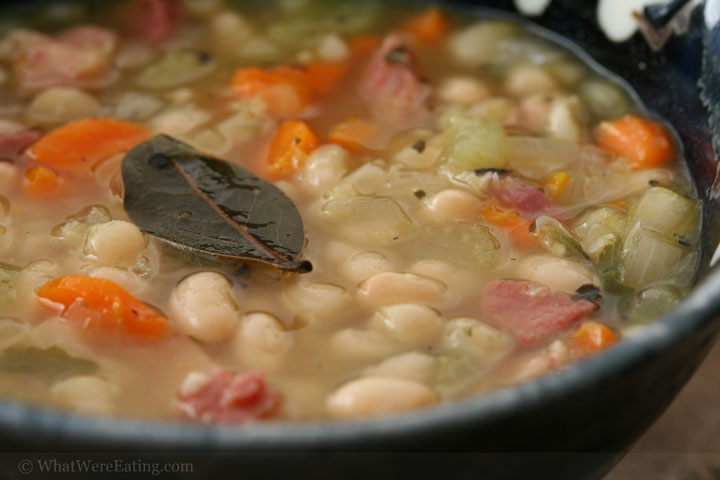
3. Mom-made Ham and White Bean Soup for lunch

4. Adele.

5. Rottweiler Puppies. I want one. No, two.

 |
| All the better for catching flying insects, my dear. |
2. Dr. Who
 |
| Guilty Pleasure! |
3. Mom-made Ham and White Bean Soup for lunch
4. Adele.

5. Rottweiler Puppies. I want one. No, two.

Friday, May 13, 2011
Another Semester Finished
After toiling under the weight of my books for another 16 weeks, I've finished another semester of my graduate studies. This semester was a heavier course load. Happy to be finished.
The summer brings a whole new animal: Klaire Catches Bugs Round II
I'm expanding the number of sites I'll collect at, from 16 to 60. (!) To manage this I'm cutting back on how often I sample-- and will collect only early summer and late summer sample periods, one week long for each.
Next (Fall) semester I am taking a statistics class, and focusing on research.
Looking like a good summer already!
Subscribe to:
Posts (Atom)